
Why 50 grams of chilli powder isn't always 50 grams of heat
A formula that weighs out the same quantities every time can still taste different every time, because the raw material itself is not a constant. Here is what a manufacturer tests for before the weighing even starts.
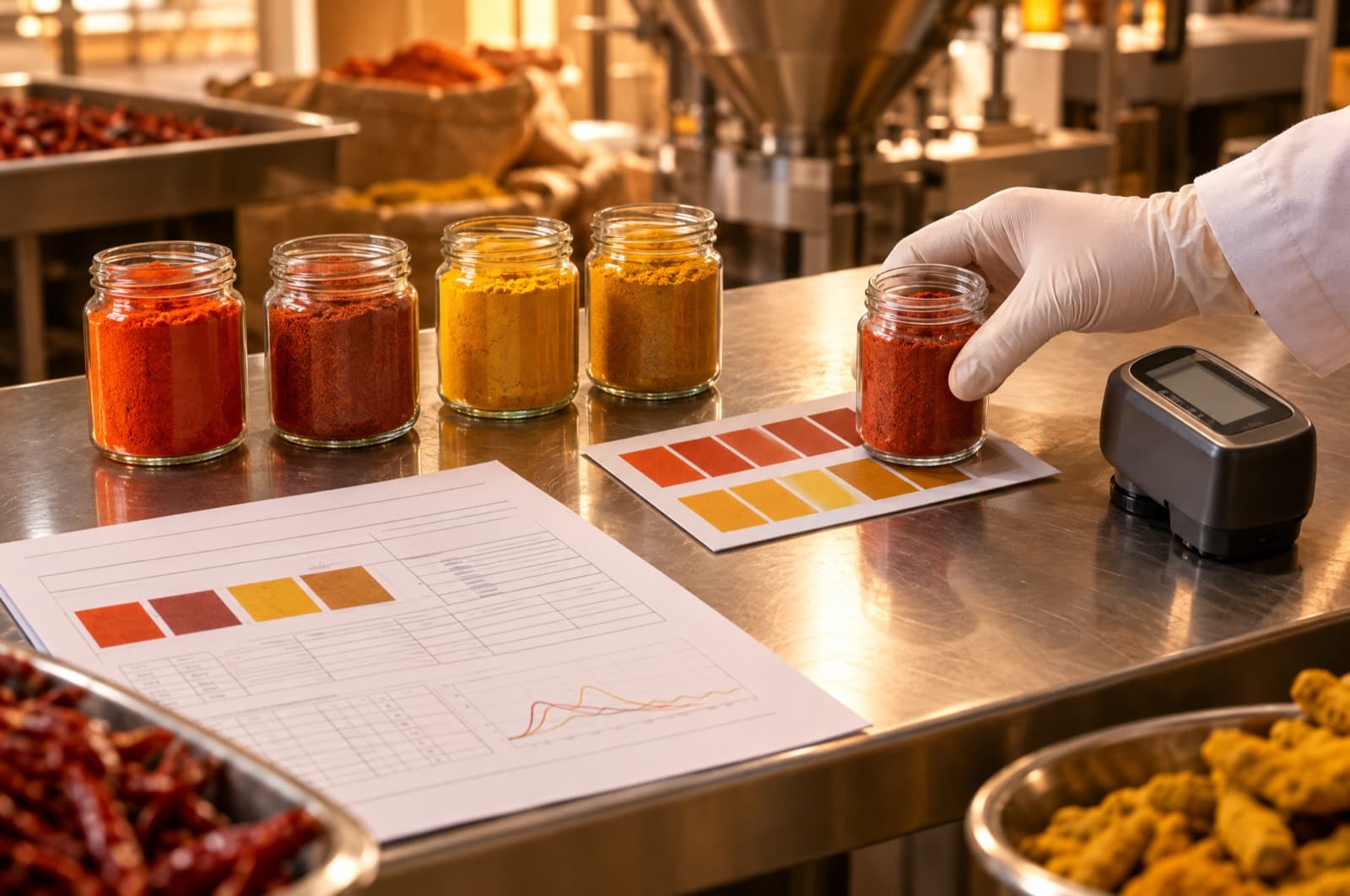
A batch goes out, a customer tastes it against the last one, and says it is milder. Nobody changed the recipe. The same 50 grams of chilli powder went into the same size batch, weighed on the same scale, by the same operator. The complaint still holds up, because the 50 grams was never the constant everyone assumed it was. The chilli was.
Peppers from the same plant can differ by as much as 30 percent in heat depending on sun exposure and watering during the growing season, and that is before two different plants, two different harvests or two different states of origin enter the picture. A weight-based recipe treats chilli powder as a fixed ingredient. It is closer to a variable one, and the variable moves lot to lot whether or not anyone is watching it.
The compound that matters is not the ingredient you weigh
Turmeric makes the same point more starkly. Curcumin is the compound that gives turmeric its colour and most of what buyers associate with its flavour and function, and screening studies of turmeric genotypes have found curcumin content ranging from roughly 2 to nearly 5 percent by weight across cultivars, with the widest reported screening range running from about 0.4 percent to 8.8 percent. Pure turmeric powder in commercial testing has averaged around 3.14 percent curcumin — a useful midpoint, and not a number any single sack is guaranteed to hit.
None of that shows up on a scale. Two jars of turmeric powder that weigh identically, look similar and smell similar can carry curcumin levels more than double one another, because curcumin content tracks the variety, the growing region and the season, not the weight of powder in the jar. A recipe that specifies "30 grams of turmeric" is specifying a mass. It has said nothing about the thing the mass is standing in for.
Tomato behaves the same way for a different reason. A tomato's Brix, colour and viscosity are set by the season it grew through — rainfall, heat stress, sunlight hours — and lock in at harvest. A paste crop that runs 28 to 32 on the colour scale one year can sit at 30 the next, entirely within specification and still visibly different to a quality team comparing the two side by side. A gravy or a sauce built on tomato solids inherits that shift whether the process changed or not.
Weight is not potency, and a scale cannot tell the difference
This is the gap between a home kitchen and a production line. A cook tasting as they go corrects for it without noticing — a bit more chilli because this batch smells milder, a shorter simmer because this tomato is already thick. A production line runs to a written formula and has no palate to correct with. If the formula says 50 grams, it gets 50 grams, and whatever potency that batch of chilli happens to carry is what the product gets.
The fix is not a better recipe. It is testing the raw material before it goes anywhere near a batch. A certificate of analysis states what a specific lot actually measured — colour value, heat level, curcumin percentage, Brix, whichever properties the ingredient is bought against — and a manufacturer checks that figure against a written tolerance range before releasing the lot for use. A chilli powder specified at 8,000 to 12,000 Scoville heat units and tested at 6,500 does not enter a batch on the strength of matching the label. It gets rejected, reblended, or the batch recipe is adjusted to compensate, and that decision happens before the scale, not after the complaint.
The 50 grams was never the constant. The chilli was.
Blending is the other half of the answer, and it is standard practice for exactly this reason. Single-origin chilli powder shows real batch-to-batch swings on its own, so specification houses blend different varieties or different lots after milling to land inside a target heat range consistently, rather than hoping one crop delivers the number on its own. The target becomes a band the blender is built to hit, not a hope pinned on one field's harvest.
What this changes about a formula
A formula that survives contact with real raw material does not specify one number for a sensitive ingredient. It specifies a range, states the property that range is measured against, and names what happens when an incoming lot falls outside it — reject, reblend, or adjust the batch weight to compensate. That is three extra pieces of information most kitchen recipes never include, because a kitchen has a cook standing over the pan to make the correction that a specification is meant to make automatic.
It also means the first conversation about consistency should happen before the first production run, not after the first complaint. At Kaflur, incoming goods are tested against a written specification before they are released to a line, and where an ingredient is known to vary — chilli, turmeric, tomato, onion — the formula is built with a tolerance band rather than a single figure from day one. If a product has been drifting between batches and nobody has traced it back to the raw material yet, that is usually where the answer is sitting. Worth a conversation before the next batch goes out the door.