
Why a twelve-month shelf life cannot be proved in six weeks
The date on a pack is not an estimate. It is the output of a programme that runs for months, starts when the formulation locks, and restarts if you change anything afterwards.
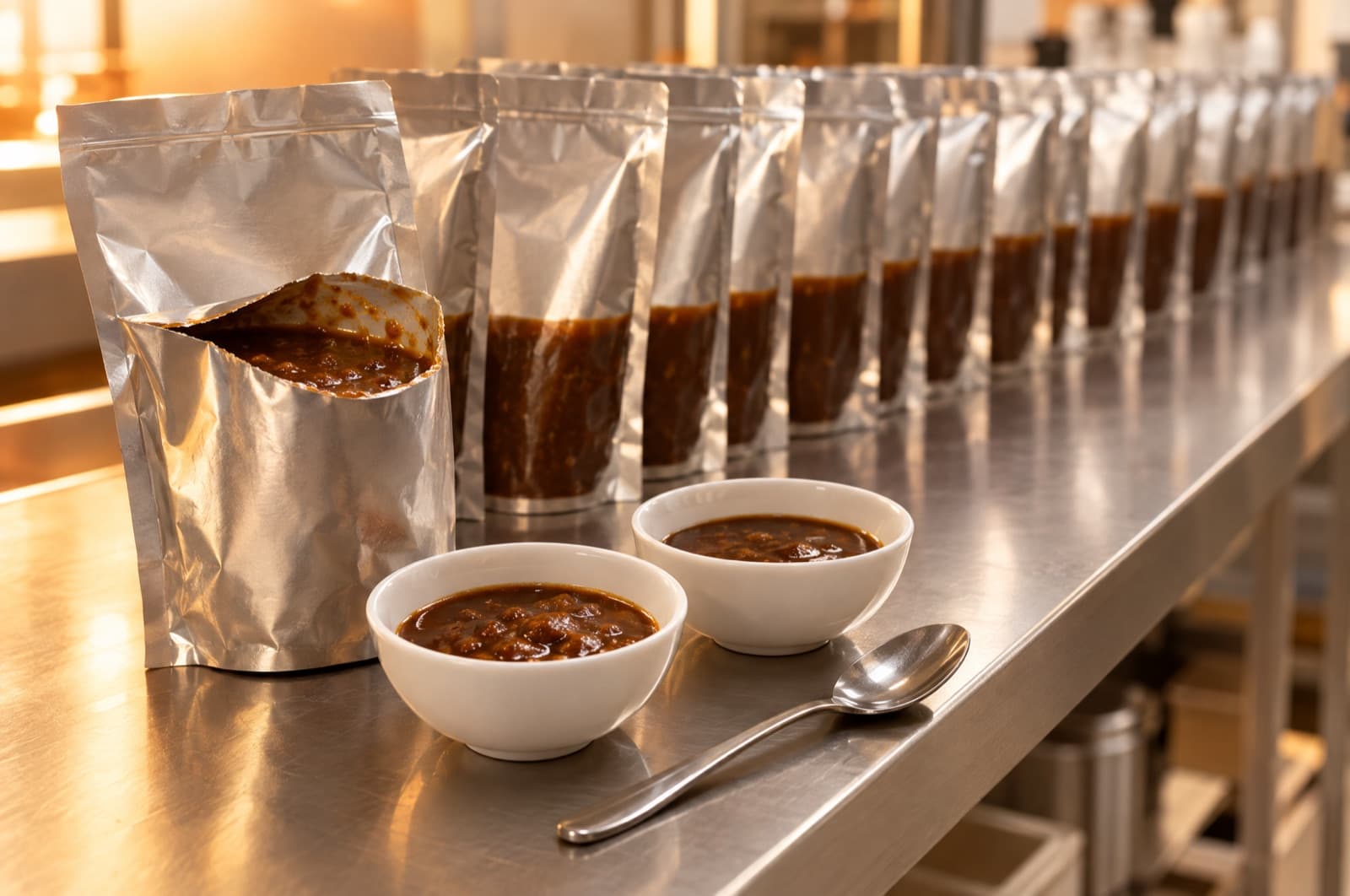
"Twelve months ambient, and we are launching in six weeks."
Each half of that sentence is reasonable. Together they describe a number printed on a pack before anything exists to support it, and a brand that finds out whether the number was true some time after the stock has left the building.
A shelf-life figure looks like a marketing input. It behaves like a measurement, and measurements take as long as they take.
Accelerated testing buys an indication, not a date
Warm the product and its chemistry runs faster. The working simplification is a factor of two: every 10°C above normal storage roughly doubles the rate of the reactions that degrade the product. Store at 40°C for a few months, apply the factor, and you have a view of a year.
That is useful, and it is the only way to get an early read. One widely used procurement protocol for processed foods asks for a minimum of six months at 40°C with a factor of two, and calls the result a potential indication of a twelve-month life. The word doing the work there is indication.
There are two reasons it stays an indication.
The first is that the models disagree with each other. The factor-of-two shortcut is a simplification of the Arrhenius relationship, and the two do not always land in the same place. A study on sauces found the shortcut produced considerably shorter estimates than Arrhenius on the same underlying data, and — more awkwardly — that the colour measurements and the sensory panel pointed in different directions. When two readings of one dataset disagree, what you are holding is a screening tool.
The second reason is harder. Campden BRI, the UK food research body, puts it without hedging: accelerated testing should not be used to determine a microbiologically safe shelf life. Raising the temperature changes which organism grows fastest, so the thing that limits the product at 40°C may not be the thing that limits it in a warehouse in Coimbatore. For a commercially sterile ambient product, safety is settled at the process rather than in storage — that argument is already published in why a retort pouch needs neither a fridge nor a preservative.
Accelerated conditions also change the pack, not only the food. Moisture and oxygen move through a laminate differently when it is warm, and food-package interactions appear at 40°C that would never have happened at 25°C. Some of what you see is an artefact of how you looked.
The real-time clock starts at formulation lock
Real-time testing is the evidence. The product sits in its actual pack under normal storage, for longer than the life you intend to claim, and gets examined at intervals along the way. It runs alongside the accelerated study rather than after it.
The part that catches founders is where the clock starts. It starts when the formulation locks — not when development began, not when the pilot ran.
Change the formulation afterwards and the clock does not resume. It restarts.
The same applies to the pack. The packaging in production has to be the packaging the study validated; a laminate swapped later for an equivalent at a better price is a new study, because barrier properties were half of what you were measuring. This is the mechanism underneath the argument that a launch date is set in the first fortnight: formulation lock is the gate, and everything expensive queues behind it.
Accelerated testing tells you what to expect. Real-time testing is what you are allowed to print.
Four things get measured, and only one of them is safety
Microbiological. Pathogens and spoilage organisms, by the limits that apply to the product and the market it is sold into.
Chemical. Peroxide value, free fatty acids, hexanal — the markers of a product going rancid before anyone can taste it. There are no universal limits for these. The threshold that matters is established for your product by running the analysis alongside the sensory panel until you know which number corresponds to the point a person notices.
Sensory. A trained panel scores appearance, odour, flavour and texture, graded against a retained control sample rather than against memory. Campden BRI recommends triplicate samples at each timepoint; where the question is specifically whether a product has drifted from its reference, a difference-from-control test may use up to twenty assessors. This is usually the measurement that ends the shelf life of an ambient product.
Pack integrity. Seal and leak testing at every timepoint, often under pressure in the region of 25 kPa, and legibility of the printing. A date code that has rubbed off in a carton is a failure, and it is the kind that only shows up at month nine.
Only the first of those four is about safety. The other three decide the number.
A failure in week six is the cheapest one you will be offered
This is the part worth sitting with. The cost of finding a problem climbs steeply at each stage it survives: a reformulation at the bench, a failed accelerated study at week six, a real-time failure at month nine with artwork printed and stock in a warehouse, and a complaint from a distributor who has already put the product in front of customers.
The arithmetic is specific to your product and your print run, and it is worth doing properly rather than taking on faith. Put the printed laminate, the stock you would be holding and the distributor relationship on one side, and six weeks of storage trials on the other.
The honest limit is that none of this feels like progress while it happens. It is months of a product sitting in a cupboard being looked at. And there is a lighter case: launching from a formulation that already has validated data in the same pack and the same process is confirming rather than establishing, which is a shorter piece of work.
What cannot be compressed is the establishing case, because the thing being bought is elapsed time.
At Kaflur, accelerated and real-time shelf-life validation runs in the quality lab alongside microbiological testing and sensory panels. The accelerated work sits inside development rather than arriving as an extra at the end. Our published ranges come out of that work: twelve months ambient on the gravies, nine on the dips, eighteen to twenty-four on the dehydrates. A date you can stand behind is the deliverable, and the reason we would rather start the clock in the week a formulation locks than argue about it in month nine.
If you have a launch date and a shelf-life figure you need to defend, the useful conversation is which of the two is actually fixed — kaflur.com.